Faith D?Aluisio and Peter Menzel have successful careers documenting diet, economic and environmental habits of the World. They have a knack for juxtaposing stories to help individuals understand their habits in comparison to those of other time zones and means.
The pair have co-created several books and I think each project is successful because of their teamwork in the field. Peter, a photographer well known for his coverage of ?science and technology, and Faith, a former TV news producer and ?talented writer, are a husband and wife power team.
In 2008, they put together a photo album of families from 21 countries. Each portrait is full color and beautifully presents one family with their weekly food supplies. With each image the authors noted the expenditures, the family?s favorite foods, brand names and facts about the country.
D?Aluisio and Menzel have discussed the impact of their work and how they hope it adds to the discussion of nutrition education:
It?s interesting to watch children with this book in their hands. It doesn?t require being read from front to back and they don?t approach it in that manner anyway; they?re drawn in by the food portraits and begin immediately to compare themselves to what they see. Afterward they go back to fill in information.?What the World Eats?is meant to get kids thinking about the world around them, but also about the food on their own plates. The U.S. Center for Disease Control reports that one in every three children born in the year 2000 will develop type 2 diabetes at some point during their life, and that more than 60 percent of American adults, and 30 percent of children are overweight or obese. This in one of the richest, most powerful countries on the planet; we are eating ourselves to death, but we can do something about it if we understand the problems. This book aids that understanding.?
An interview with the two of them can be found here:?http://www.sharecare.com/healthmakers/Peter-Menzel-and-Faith-D-Aluisio
Food is a powerful topic. It?s no surprise that the dietary habits of people help explain socioeconomic factors of a region. A simple viewing of contents at a ?dinner table? sheds light on lifestyle, salary, climate and health conditions. This album is a testament to that. Your jaw will drop at how some of these purchases add up. Your jaw may also drop at what is being purchased. Some scenes are humbling and some are appalling. Some choices you may expect and some of the brands that appear may greatly surprise you. ?See for yourself in this selection from the book:
The Ayme Family (Tingo, Ecuador) : $31.55/week
?
The Caven Family (California, United States) : $159.18/week
?
The Batsuuri Family (Ulaanbaatar, Mongolia) : $40.02/week
?
The Ahmed Family (Cairo, Egypt) : $68.53/week
??
The Casales Family (Cuernavaca, Mexico) : $189.09/week
?
The Revis Family (North Carolina, United States) : $341.98/week
?
The Al Haggan Family (Kuwait City, Kuwait) : $221.45/week
?
The Aboubakar Family (Breidjing Camp, Chad) : $1.23/week
?
The Manzo Family (Sicily, Italy) : $260.11/week
?
The Ukita Family (Kodaira City, Japan) : $317.25/week
New knowledge about permafrost improving climate modelsPublic release date: 28-Jul-2013 [ | E-mail | Share ]
Contact: Bo Elberling be@geo.ku.dk 45-23-63-84-53 University of Copenhagen
Climate
New research findings from the Centre for Permafrost (CENPERM) at the Department of Geosciences and Natural Resource Management, University of Copenhagen, document that permafrost during thawing may result in a substantial release of carbon dioxide into the atmosphere and that the future water content in the soil is crucial to predict the effect of permafrost thawing. The findings may lead to more accurate climate models in the future.
The permafrost is thawing and thus contributes to the release of carbon dioxide and other greenhouse gases into the atmosphere. But the rate at which carbon dioxide is released from permafrost is poorly documented and is one of the most important uncertainties of the current climate models.
The knowledge available so far has primarily been based on measurements of the release of carbon dioxide in short-term studies of up to 3-4 months. The new findings are based on measurements carried out over a 12-year period. Studies with different water content have also been conducted. Professor Bo Elberling, Director of CENPERM (Centre for Permafrost) at the University of Copenhagen, is the person behind the novel research findings which are now being published in the internationally renowned scientific journal Nature Climate Change.
"From a climate change perspective, it makes a huge difference whether it takes 10 or 100 years to release, e.g., half the permafrost carbon pool. We have demonstrated that the supply of oxygen in connection with drainage or drying is essential for a rapid release of carbon dioxide into the atmosphere," says Bo Elberling.
Water content in the soil crucial to predict effect of permafrost thawing
The new findings also show that the future water content in the soil is a decisive factor for being able to correctly predict the effect of permafrost thawing. If the permafrost remains water-saturated after thawing, the carbon decomposition rate will be very low, and the release of carbon dioxide will take place over several hundred years, in addition to methane that is produced in waterlogged conditions. The findings can be used directly to improve existing climate models.
The new studies are mainly conducted at the Zackenberg research station in North-East Greenland, but permafrost samples from four other locations in Svalbard and in Canada have also been included and they show a surprising similarity in the loss of carbon over time.
"It is thought-provoking that microorganisms are behind the entire problem microorganisms which break down the carbon pool and which are apparently already present in the permafrost. One of the critical decisive factors the water content is in the same way linked to the original high content of ice in most permafrost samples. Yes, the temperature is increasing, and the permafrost is thawing, but it is, still, the characteristics of the permafrost which determine the long-term release of carbon dioxide," Bo Elberling concludes.
###
Link to the scientific article
Contact
Professor Bo Elberling, Director of CENPERM, Centre for Permafrost, Department of Geosciences and Natural Resource Management, University of Copenhagen, ster Voldgade 10, DK-1350 Copenhagen K. Mobile: + 45 2363 8453.
About CENPERM
The core funding for the Centre for Permafrost for the 2012-2018 period is a Centre of Excellence grant from the Danish National Research Foundation. CENPERM is an interdisciplinary project studying the biological, geographical and physical effects of permafrost thawing in Greenland.
The studies combine field studies in Greenland under extreme conditions with laboratory experiments under controlled conditions. The studies are intended to decode the complex interaction between microorganisms, plants and soil during permafrost thawing.
Permafrost and carbon
Permafrost is layers of soil and sediments which remain frozen for more than two consecutive years, while the active layer is the top layer of soil which thaws during the summer.
In Arctic areas with so-called continuous permafrost, the permafrost may be several hundred metres deep. The permafrost contains large amounts of organic matter, because the pool is built up over several thousand years. The pool can be extremely large and includes old top layers containing organic material which have been buried by wind or water-deposited sediments.
This means that near-surface layers, over time, will become a part of the permafrost. In addition, the decomposition rate of the pool of organic matter is slow during the generally cold conditions in the Arctic. It is well-documented that carbon in organic matter can be decomposed when permafrost layers thaw, and that these decomposition processes can contribute to a significant release of both carbon dioxide and methane two well-known and problematic greenhouse gases.
How rapidly thaws the permafrost
Observations from Greenland may provide the answer to the question of how rapidly the permafrost thaws. The depth of the active layer in Zackenberg in North-East Greenland has been measured at the end of the growth season since 1996.
The measurements show that the depth of the active layer increases by more than 1 cm per year, which means that, as a minimum, more than 1 cm of permafrost thaws every year. This is the minimum figure, because permafrost, due to its content of ice, will typically decrease in size after thawing and becoming a part of the active layer.
The Danish Meteorological Institute has climate models for the period up until 2100 that cover all of Greenland. The model results predict a future climate with an annual summer mean temperature that is 2-3 degrees higher than today.
All things being equal, this translates into an increase in permafrost thawing in the order of 10-30 cm over the next 70 years. The reason for not stating a more precise figure is that the increase in thawing depends on soil type, in particular the water content. The maximum thawing depth is expected in the dry soil types.
[ | E-mail | Share ]
?
AAAS and EurekAlert! are not responsible for the accuracy of news releases posted to EurekAlert! by contributing institutions or for the use of any information through the EurekAlert! system.
New knowledge about permafrost improving climate modelsPublic release date: 28-Jul-2013 [ | E-mail | Share ]
Contact: Bo Elberling be@geo.ku.dk 45-23-63-84-53 University of Copenhagen
Climate
New research findings from the Centre for Permafrost (CENPERM) at the Department of Geosciences and Natural Resource Management, University of Copenhagen, document that permafrost during thawing may result in a substantial release of carbon dioxide into the atmosphere and that the future water content in the soil is crucial to predict the effect of permafrost thawing. The findings may lead to more accurate climate models in the future.
The permafrost is thawing and thus contributes to the release of carbon dioxide and other greenhouse gases into the atmosphere. But the rate at which carbon dioxide is released from permafrost is poorly documented and is one of the most important uncertainties of the current climate models.
The knowledge available so far has primarily been based on measurements of the release of carbon dioxide in short-term studies of up to 3-4 months. The new findings are based on measurements carried out over a 12-year period. Studies with different water content have also been conducted. Professor Bo Elberling, Director of CENPERM (Centre for Permafrost) at the University of Copenhagen, is the person behind the novel research findings which are now being published in the internationally renowned scientific journal Nature Climate Change.
"From a climate change perspective, it makes a huge difference whether it takes 10 or 100 years to release, e.g., half the permafrost carbon pool. We have demonstrated that the supply of oxygen in connection with drainage or drying is essential for a rapid release of carbon dioxide into the atmosphere," says Bo Elberling.
Water content in the soil crucial to predict effect of permafrost thawing
The new findings also show that the future water content in the soil is a decisive factor for being able to correctly predict the effect of permafrost thawing. If the permafrost remains water-saturated after thawing, the carbon decomposition rate will be very low, and the release of carbon dioxide will take place over several hundred years, in addition to methane that is produced in waterlogged conditions. The findings can be used directly to improve existing climate models.
The new studies are mainly conducted at the Zackenberg research station in North-East Greenland, but permafrost samples from four other locations in Svalbard and in Canada have also been included and they show a surprising similarity in the loss of carbon over time.
"It is thought-provoking that microorganisms are behind the entire problem microorganisms which break down the carbon pool and which are apparently already present in the permafrost. One of the critical decisive factors the water content is in the same way linked to the original high content of ice in most permafrost samples. Yes, the temperature is increasing, and the permafrost is thawing, but it is, still, the characteristics of the permafrost which determine the long-term release of carbon dioxide," Bo Elberling concludes.
###
Link to the scientific article
Contact
Professor Bo Elberling, Director of CENPERM, Centre for Permafrost, Department of Geosciences and Natural Resource Management, University of Copenhagen, ster Voldgade 10, DK-1350 Copenhagen K. Mobile: + 45 2363 8453.
About CENPERM
The core funding for the Centre for Permafrost for the 2012-2018 period is a Centre of Excellence grant from the Danish National Research Foundation. CENPERM is an interdisciplinary project studying the biological, geographical and physical effects of permafrost thawing in Greenland.
The studies combine field studies in Greenland under extreme conditions with laboratory experiments under controlled conditions. The studies are intended to decode the complex interaction between microorganisms, plants and soil during permafrost thawing.
Permafrost and carbon
Permafrost is layers of soil and sediments which remain frozen for more than two consecutive years, while the active layer is the top layer of soil which thaws during the summer.
In Arctic areas with so-called continuous permafrost, the permafrost may be several hundred metres deep. The permafrost contains large amounts of organic matter, because the pool is built up over several thousand years. The pool can be extremely large and includes old top layers containing organic material which have been buried by wind or water-deposited sediments.
This means that near-surface layers, over time, will become a part of the permafrost. In addition, the decomposition rate of the pool of organic matter is slow during the generally cold conditions in the Arctic. It is well-documented that carbon in organic matter can be decomposed when permafrost layers thaw, and that these decomposition processes can contribute to a significant release of both carbon dioxide and methane two well-known and problematic greenhouse gases.
How rapidly thaws the permafrost
Observations from Greenland may provide the answer to the question of how rapidly the permafrost thaws. The depth of the active layer in Zackenberg in North-East Greenland has been measured at the end of the growth season since 1996.
The measurements show that the depth of the active layer increases by more than 1 cm per year, which means that, as a minimum, more than 1 cm of permafrost thaws every year. This is the minimum figure, because permafrost, due to its content of ice, will typically decrease in size after thawing and becoming a part of the active layer.
The Danish Meteorological Institute has climate models for the period up until 2100 that cover all of Greenland. The model results predict a future climate with an annual summer mean temperature that is 2-3 degrees higher than today.
All things being equal, this translates into an increase in permafrost thawing in the order of 10-30 cm over the next 70 years. The reason for not stating a more precise figure is that the increase in thawing depends on soil type, in particular the water content. The maximum thawing depth is expected in the dry soil types.
[ | E-mail | Share ]
?
AAAS and EurekAlert! are not responsible for the accuracy of news releases posted to EurekAlert! by contributing institutions or for the use of any information through the EurekAlert! system.
If you've pre-ordered one of the two Blackmagic cinema cams announced at NAB this year, there's good, not-so-good and bad news coming out of a Blackmagic event yesterday. First the good: Blackmagic's Pocket Cinema model, which stunned observers with its 2K RAW specs and sub-$1,000 price tag, should start shipping in a few days. That's close to the July 25th date promised for both cameras, although there could be a not-so-good caveat. John Brawley (who showed off the Pocket Cinema's first pristine images) told forum users that it would likely only have ProRes 422 support, and not RAW, at first -- though Blackmagic told us they "couldn't confirm" that. As for the bad part, those who laid down the most cash ($4,000 or so) will have to wait for the Production Camera 4K. The company told event-goers it wouldn't arrive until early September now, but when we reached out for clarification, it gave the following statement:
With regards to the Production Camera 4K there is still several weeks of work to do before this enters full production manufacturing, however we expect to ship the first quantities of this model before the end of August.
Still, given the company's track record of delays with the original Cinema Camera, you may want to avoid relying on that info for any time-specific projects.
I remember my family's first Logitech product well. It was a mouse, roughly the size of a small football and shaped like a half eaten apple and the color of dirty bones. It rolled and it clicked and did everything it was supposed to. It was not an artifact of fine design.
? 2013 - U.S. and Italian troops train together as they earn their wings.
X
Terms of Service
On the DVIDS social media sites, we strive to provide a variety of news related to all branches of the U.S. Armed Forces with the assistance of military public affairs produced content.
While this is an open forum, it's also a family friendly one, so please keep any comments clean. In addition to keeping it family friendly, we ask that you follow our posting guidelines here. Posts will be removed if they violate the guidelines listed below.
We do not allow graphic, obscene, explicit or racial comments or submissions nor do we allow comments that are abusive, hateful or intended to defame anyone or any organization.
We do not allow solicitations or advertisements. This includes promotion or endorsement of any financial, commercial or non-governmental agency. Similarly, we do not allow attempts to defame or defraud any financial, commercial or non-governmental agency.
We do not allow comments that suggest or encourage illegal activity.
Apparent spamming or trolling will be removed and may cause the author(s) to be blocked from the page without notice.
You participate at your own risk, taking personal responsibility for your comments, your username and any information provided.
All information posted to social media sites will be unclassified. No FOUO (for official use only), or classified information should ever be posted.
The appearance of external links on this site does not constitute official endorsement on behalf of Defense Video Imagery and Distribution System.
For more information, visit the DoD Social Media user agreement at:
http://www.defense.gov/socialmedia/user-agreement.aspx
This work, U.S., Italian Troops Exchange Skills, by Terry Turner, identified by DVIDS, is free of known copyright restrictions under U.S. copyright law.
CINCINNATI, OH (FOX19) - Members of the Anderson Township Library Association thank everyone in the community who came to the 2013 June Used Book Sale last month. The sale raised $40,000, which will be used to support adult and children?s programs, as well as to purchase books and equipment, at the Anderson Township and Mt. Washington branch libraries.
Raffles were held Friday and Saturday. First-place winners won 100 hardback books, while second- and third-place winners won $10 and $5 gift certificates, respectively, for the next ATLA book sale November 7-9. ?
Friday?s raffle: First-place winner was Tom Fariello of Anderson, second-place winner was Phyllis Raker, a former longtime Anderson resident who recently moved to Pierce Township, and third-place winner was Anne Bruce of Anderson.
Saturday?s raffle: First-place winner was Kerry Loeffler of Anderson, second-place winner was Jeanette Miller of Anderson, and third-place winner was Michael Smith of New Richmond.
Deserving a prize for long-distance travel was customer Shelly Kaltenbach, who drove three hours from Jackson County, Ohio, to attend the book sale. She?s a teacher for Jackson City Schools.
For additional information about ATLA or their book sales, call 513-369-6030 or visit www.cincinnatilibrary.org/support/atla.html.
Over the past 19 seasons, the girls of "America's Next Top Model" have basically done it all -- from massive makeover meltdowns to girl-on-girl catfights. So what does creator and star Tyra Banks do when the girls can no longer deliver high ratings? Bring in the boys!
The CW
Men are coming to "America's Next Top Model."
For the first time ever, the upcoming season of "Top Model" will feature male models. Eight men and eight women will live together and compete for a national ad campaign with GUESS, a spread in Nylon magazine and a modeling contract with Next Model Management.
"It's guys and girls," one female contestant says in the season's trailer. "What could be more dramatic than that?"
"Girls, you think you run the show but you have no idea what you're getting yourselves into with the guys," offers one of the buffed and bronzed male contestants.
Last season, the show underwent some major revamping, including contestants who were all college students, a new judges' panel and a move to a new night, but the tweaks failed to bring the show back to its glory days of high ratings.
"This cycle will explore the similarities and differences that male and female models face in the pursuit of their careers, bringing on experts and celebrities to mentor and challenge them each week," the show's website claims. "There will be more than a little opportunity for rivalry, flirtation and romance."
Will it be enough to save "Top Model?" We'll have to wait until the new season premieres on Friday, Aug. 2 to find out.
Ford F-150 Lariat Limited
CD player
Compass
Delay-off headlights
Door mirrors: body-color
Driver door bin
Driver vanity mirror
Dual front impact airbags
Dual front side impact airbags
Electronic stability
Front bench seats
Front beverage holders
Front center armrest w/storage
Front dual zone A/C
Front fog lights
Transmission
Not Specified
CONTACT INFORMATION
Although we endeavour to provide the most accurate description of the vehicle, we
are not responsible or liable for errors and omissions in the descriptions, features
and prices. Please confirm accuracy of information with the seller.
LONDON (Reuters) - Prince William's wife Kate gave birth to a baby boy on Monday, their first child who will be third in line to the British throne, ending hours of fevered anticipation outside the London hospital where the child was delivered.
The baby was born with William at Kate's side at 4:24 p.m. (11:24 ET) and weighed 8lbs 6oz (3.8 kg).
"The Queen, The Duke of Edinburgh, The Prince of Wales, The Duchess of Cornwall, Prince Harry and members of both families have been informed and are delighted with the news," Clarence House, Prince William's office, said in a statement.
"Her Royal Highness and her child are both doing well and will remain in hospital overnight."
The boy's name will be announced in due course, the statement said but bookmakers make George the favorite name, followed by James.
As the birth was announced, a loud cheer went up from the well-wishers and media gathered outside St. Mary's Hospital in west London, where William was born to the late Princess Diana in 1982.
"Both my wife and I are overjoyed at the arrival of my first grandchild," Prince Charles, William's father and heir to the throne, in a statement.
"It is an incredibly special moment for William and Catherine and we are so thrilled for them on the birth of their baby boy."
He said he was enormously proud and happy to be a grandfather for the first time.
"We are eagerly looking forward to seeing the baby in the near future," he added.
The statement from Clarence House preceded the traditional announcement which saw an envelope containing the baby's details taken from the hospital to Queen Elizabeth's London residence, Buckingham Palace.
Aides then posted the information on a gold-colored easel outside the main gates.
The royal couple, officially known as the Duke and Duchess of Cambridge, had arrived at the hospital shortly before 6 a.m. and entered through a back door to avoid media camped outside the main entrance.
Kate and William, both aged 31, met when they were students at St. Andrews University and were married in April 2011 in a spectacular wedding broadcast around the world.
The royal birth has provoked a similar frenzy, with national and international media keeping up a deluge of speculative reports throughout Monday from outside the hospital.
Crowds gathered outside the hospital and Buckingham Palace, eager to hear news of the birth.
"Right across the country and indeed right across the Commonwealth people will be celebrating and wishing the royal couple well," Prime Minister David Cameron told waiting reporters in Downing Street.
"It is an important moment in the life of our nation but I suppose above all it's a wonderful moment for a warm and loving couple who got a brand new baby boy. It's been a remarkable few years for our royal family."
The baby arrives at a time when the royal family is riding a wave of popularity. An Ipsos Mori poll last week showed 77 percent of Britons were in favor of remaining a monarchy over a republic, close to its best-ever level of support.
(Additional reporting by Belinda Goldsmith, Sarah Young, Limei Hoang, and Mark Anderson,; Editing by Angus MacSwan and Michael Roddy)
Rather than constantly worrying about the cost of repeat insurance claims, wastage of funds because of high stock levels, or the threat of cyber crime throwing the business into chaos,?doesn?t?it make good sense to reduce the likelihood of things going wrong in the first place? This is the art of risk management, where the motto is ?prevention is better than cure?. It?s a discipline applicable to any scale of business, but the first step is understanding the essentials of how it works.
?
As an SME you might well be asking yourself whether risk management is applicable or practical for your business. Risks differ between SME sectors. Food and beverage businesses with perishable goods; medical or clinical establishments with high value electronic equipment on which there is a huge reliance to provide continuity of services; schools and colleges that have potential liabilities to students, staff, and visitors ? the list goes ever onwards.
Risks also vary according to your distribution and service model. Internet based business models are exposed to risks that differ from businesses requiring an office/retail outlet and which hold valuable stock. Some businesses may have ongoing financial commitments (such as rent) even if they suffer business interruption that stops or reduces their ability to generate revenues.
Onshore and offshore SME businesses here in the GCC also have different considerations in the form of licenses, the particular legal system that applies, and the style of regulation.
Moreover, your business model, strategy, and marketplace expose you to business risks. In other words simply by being in business exposes an SME to risk. A few examples of the risks which might resonate with you as an SME are likely to include:
? Cash flow. Customers and clients not paying in a timely manner (resulting?in monies being due, however not accessible monies, as they?re needed for your own outgoings)
? Errors or omissions. By staff who may be required to fulfill multiple functions (resulting in customer dissatisfaction or loss, and reputational damage)
? Cyber attack. On your website, customer information, and/or banking information of your clients or customers (resulting in liability to customers for financial loss, breach of data privacy or protection).
Tackling the risks in five key steps
One of the advantages of risk management is that while the risks themselves may be diverse and complex, the process of tackling them can be crystallized into a relatively simple five step process. This can best be described as -
1. Assessing the key things that might cause an issue to, disrupt, and/or make your business fail. Focus on identifying the top five to ten items (these are your key identified downside risks). You do not need a huge list of risks, simply a representative one for your business.
Consider both internal and external causes of risk. For example:
? Economic downturn ? Outsourced invoicing with receivables being collected (and held by a third party) ? Reliance on one key person for your business to be successful ? Large values of stock held in one location (theft/fire/obsolescence risk).
Your internal staff and management team are better placed than any third party to identify the risks which specifically apply to your business. Third parties can however help by bringing cross-sector experience, deep industry knowledge, or by challenging the team to think more broadly.
2. For your top five to 10, record whether the issue identified in step one could possibly happen or might be likely to happen (likelihood). In addition, consider what the impacts would be (financial, business collapse, reputational damage, loss of licence, other). These are the possible impacts. Overall this is your risk assessment.
For some of your top five to 10, you might decide to accept these risks (they are unlikely or have a minimal impact). For others in your top five to 10 you might determine that they are likely, or would have an unacceptable impact. For these risks, continue to Step Three.
3. Determine what you can influence or change. Can you reduce the likelihood, or the impact, or both? Before embarking on action, factor in the cost against the benefit. Spending USD50,000 to manage a risk that might have a maximum consequence of USD5,000 and no reputational damage can never be considered to be good business sense. This will provide you with a risk management action plan. Make sure that you take action in a timely manner. Address actions proactively, before that risk has become a reality.
4. After review of what can be managed and makes good business sense to action, consider whether there are still risks that the business could not recover from, or might have difficulty in recovering from.
Can you transfer some of the risk, even if only the financial consequences to another party? Insurance is one such arrangement, and involves pooling funds from many to pay for the losses that some may incur. These are your risk transfer options. Remember however that the risk transfer will not be without cost.
5. If you opt to devote time to understanding your business risks, discuss these in your management team. Evolve your top five to 10 as you define or change your strategy; as you consider expanding into different markets or countries; if you are considering an IPO; as you become aware of external factors that impact your business changing. The investment that you may make in risk management does not need to be extensive to be effective. It does however need to be a living, evolving approach.
Is risk management worthwhile for you?
To conclude; is risk management for your SME: ? Possible? ? Practical? ? Worth the investment?
For your SME, only you can tell.
If you believe it could be, then make sure that the approach is scaled to your business, and is specific to your business.
Spin-off benefits that large corporate entities derive from investment in risk management include protection of business interests, and enhanced governance. Regulators, rating agencies and financiers derive comfort from any businesses able to identify, articulate, and manage the risks that might have a negative impact on business and revenues. For risk-managed companies, prevention is better than cure.
???????????????????????????????????????????
Audrey Weir is Chief Risk Officer with AIG MEA Limited, based in Dubai. Audrey brings to her role an in depth knowledge of risk and insurance earned over a 25 year career that spans the geographies of North America, Europe, and the Middle East. Audrey has held key risk and insurance management positions with global players such as PricewaterhouseCoopers, Fujitsu, Transport for London, and Aon. She commands an expansive career which crosses a wide array of sectors including Construction, Energy, Real Estate/Commercial Property, Financial Services/Institutions, Retail, Information Technology, and Transport. In addition to her corporate experience, Audrey spent six years as a University Lecturer, Careers Tutor, and Director of Studies in Risk Management.
LOS ANGELES (Reuters) - Heavy rains overnight helped slow a massive Southern California wildfire that had threatened the town of Idyllwild, a community about a mile above sea level known for its hiking trails, rock climbing and arts and music scene.
Evacuation orders for Idyllwild and nearby Fern Valley were lifted late Sunday morning, and a spokeswoman for the U.S. Forest Service said tourism businesses were expected to re-open by evening.
"Today the residents and business owners were able to go back home and tonight they'll open Idyllwild back up to all visitors so we can start business as usual and let people come up to that beautiful little community," spokeswoman Norma Bailey said.
The so-called Mountain Fire was 49 percent contained by Saturday night, up from 25 percent earlier in the day and 15 percent on Friday, Bailey said.
The blaze has burned across more than 27,000 acres of dry brush and timber and destroyed seven residences since it broke out last Monday.
The flames forced the evacuation of Idyllwild and nearby Fern Valley, about 90 miles east of Los Angeles, affecting about 6,000 residents, business owners and tourists, Bailey said.
At its peak, 3,478 firefighters were working to control the blaze, according to the California Department of Forestry and Fire Protection. Ten air tankers and 20 helicopters were also deployed in the effort.
On Friday, July 19, 2013, Todd Starnes published an article amid growing online social controversy regarding Christian complaints that Facebook is unfairly blocking their pages. Starnes wrote, "In recent months, the social networking website has come under fire from conservatives and Christians who said their pages have been either blocked or banned because of ?abusive? content."
"); }
Some of the commentators complained of religious discrimination plus they resent "filth" they feel Facebook shouldn't allow. In response, a commentator on the article suggested a well-received "alternative" to Facebook:
How about a Christian alternative to FaceBook called "FaithBook ". Although thome may thay we're making fun of Daffy Duck. Sorry, I couldn't resist.
One of the most recent Christians to join this chorus of complaints is Kirk Cameron, who first achieved stardom acting in ?Growing Pains." Currently, the actor turned Christian activist, is promoting his new film,?Unstoppable.? Starnes reported that Facebook blocked Cameron's promotion of his movie trailer because the links were reported to be ?abusive, unsafe and spammy.?
It pays to have a large following of friends on Facebook. After 250,000 Cameron fans joined his online crusade to force Facebook to back down on the block, the social giant capitulated to the online pressure to drop the ban.
In the meantime, whether half in jest or a serious desire, an online call flowering for a Christian social network often pops up generally following outrage over what is considered by Christians to be religious discrimination. Unfortunately, "FaithBook" is already taken. It's possible to check out the site currently carrying that name by signing in with Google, Yahoo!, or even Facebook.
Tickets are available for.Cameron's movie, "Unstoppable.? It's a one-night, live event 8 p.m. EST on Sept. 24. In the trailer, Kirk says he came out of a harrowing trip to discover why God allows bad things to happen to good people with his faith "that good is stronger than evil and faith is stronger than doubt."
Cameron might have added, "And united, we are stronger than Facebook." Perhaps Facebook should remember that when they declare "war on Christianity."
JUBA/KHARTOUM (Reuters) - South Sudan plans to sell 6.4 million barrels of oil worth $300 million before shutting down its entire production by the end of July due to a row over its alleged support for rebels in neighbouring Sudan, its oil minister said on Saturday.
Sudan, the sole conduit for South Sudan's oil exports, said a month ago it would close two cross-border oil pipelines within 60 days and insisted output be shut by August 7 unless South Sudan gave up support for the rebels. Juba denies backing insurgents.
The shutdown is bad news for both countries, which fought one of Africa's longest civil wars before separating in 2011.
Diplomats worry South Sudan might collapse without oil, the main source for the budget apart from foreign grants. They point to recent looting of aid agencies by soldiers as a sign that Juba is struggling to pay salaries.
Closing the wells is also grave news for Sudan, which has been struggling with turmoil since losing most oil reserves with South Sudan's secession. Oil fees from Juba are essential to bringing down soaring inflation, which stokes dissent.
South Sudan had only resumed oil production in April, after turning off wells pumping around 300,000 barrels per day in January 2012 when both sides failed to agree on pipeline fees.
Oil industry insiders say once the pipelines are closed it will take several months to restart production as they would have to be flushed of water and cleaned first.
South Sudan sold 1 million barrels of crude in June and had contracted further sales of 2.2 million for shipment in July and 3.2 million in August, Oil Minister Stephen Dhieu Dau told Reuters.
"There is enough crude in the pipeline to meet this," he said. Sudan has said it would allow the sale of oil which has already reached pipelines on its territory or the export terminal on the Red Sea.
Dau repeated South Sudan was not backing any Sudanese rebels. "We are committed to the flow of the oil. It is in the interest of the two countries. We don't see that this shutdown can bring any peace or stop internal rebellions in Sudan."
"It will have a negative impact on Sudan and South Sudan. Our economies will suffer," he said. Sudan will get pipeline fees of around $100 million until the shutdown, he added.
Khartoum accuses Juba of supporting the "Sudanese Revolutionary Front" (SRF), a rebel alliance, which complains of neglect at the hands of the wealthy Khartoum elites. The SRF in April staged an attack on central Sudan, embarrassing the army on whose support President Omar Hassan al-Bashir depends.
South Sudan in turn accuses Sudan of backing rebels in its eastern Jonglei state, where fighting is making it impossible to realise government plans to search for oil with the help of France's Total and U.S. Exxon Mobil.
Rahmatullah Osman, undersecretary in Sudan's foreign ministry, told al-Akhbar newspaper Sudan would not allow any passage of South Sudanese oil unless Juba cut all ties with insurgents.
"There won't be any reversal," he said, adding that Sudan hoped like South Sudan that China would mediate. China dominates the oil industries in both countries, and state firm China National Petroleum Corp is most affected as it runs the oilfields in the South with Malaysia's Petronas and Indian firm ONGC Videsh.
(Reporting by Andrew Green in Juba and Khalid Abdelaziz in Khartoum; Writing by Ulf Laessing; Editing by Mark Potter)
July 16, 2013 - California?s teen birth rate has continued to decline to 28.0 births per every 1,000 teens ages 15-19, announced Dr. Ron Chapman, director of the California Department of Public Health (CDPH) and the state public health officer today.
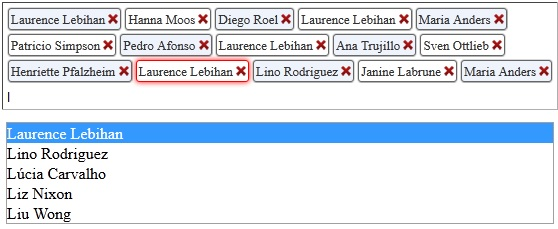
This article is about auto suggestion control as shown in Figure. In this article we will learn how to make an Auto Suggesation Control using Auto Complete Extender.
Background
Before going through this article you must have knowledge in C#, ASP.NET Controls (TextBox, HiddenField, Datalist), JavaScript. To know how to download and install Ajax toolkit please
go through following link
When we select any item from AutoCompleteExtender the following JavaScript function gets executed,
at OnClientItemSelected and creates an Autopostback for onvaluechanged event of the HiddenField.
function OnItemSelected(source, eventArgs) {
var hdnValueID = "<%= hdnValue.ClientID %>";
document.getElementById(hdnValueID).value = eventArgs.get_value();
__doPostBack(hdnValueID, "");
}
The following C# code is used to create a? DataTable in ViewState, add/remove items in the DataTable and Bind it to GridView.


 The Manzo Family (Sicily, Italy) : $260.11/week

![[ Back to EurekAlert! ]](http://www.eurekalert.org/images/back2e.gif) Public release date: 28-Jul-2013
Public release date: 28-Jul-2013 Share ]